
15-Minute Low-Impact Cardio Workout at Home
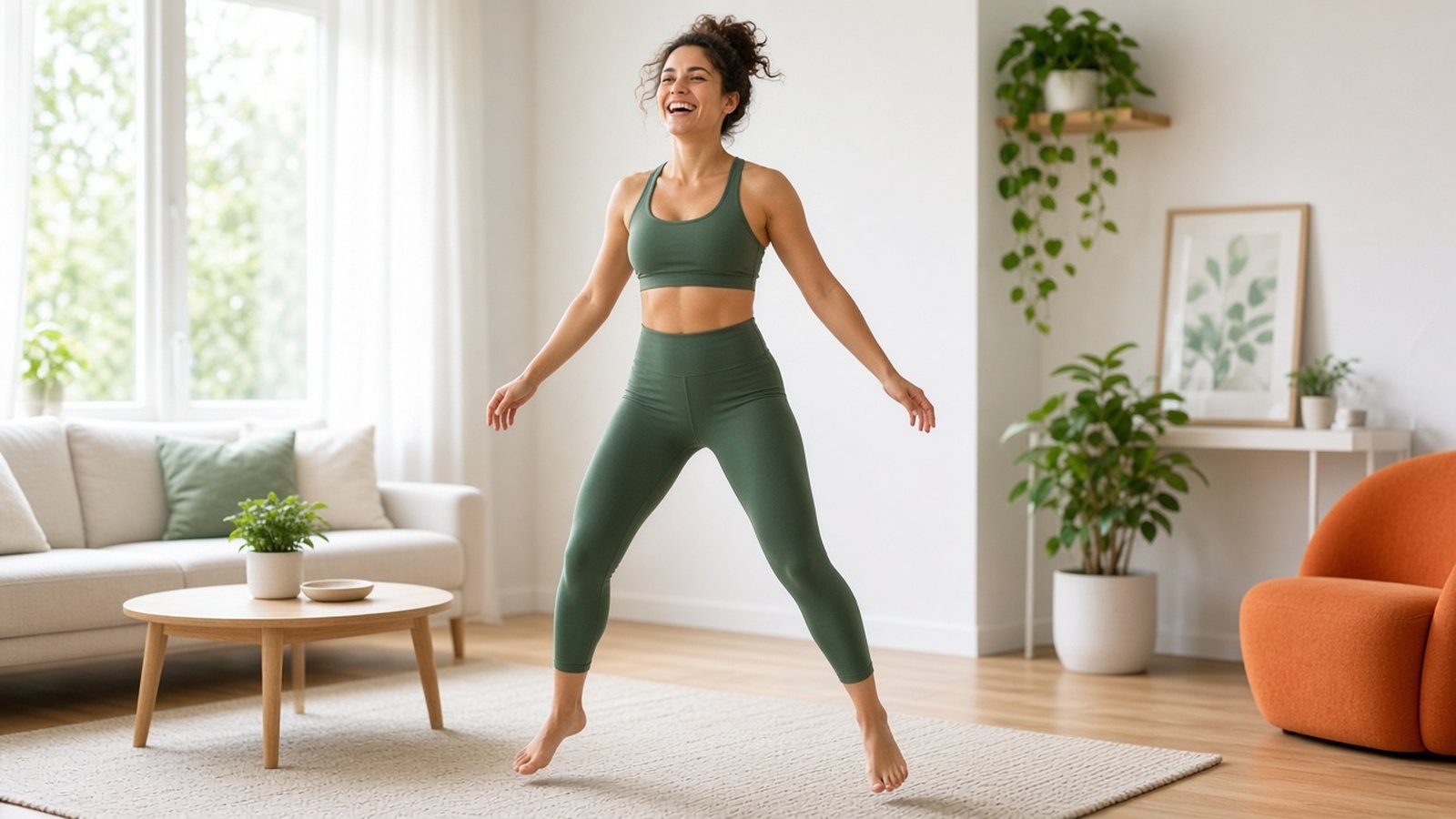
You do not need to jump around or own any equipment to get your heart rate up. This 15-minute routine uses ten low-impact moves, which means one foot usually stays on the ground. That makes it quieter for apartments, friendlier on the joints for many people, and easy to fit into a small space. Go at your own pace and adjust the moves as you need.
Quick Summary
On this page
- Before You Start
- The 15-Minute Plan
- The 10 Low-Impact Moves
- Cool Down
- How Often to Do It
- Safety Tips
- Our verdict
Before You Start
- Clear a space about the size of a yoga mat, with nothing to trip over.
- Wear supportive shoes, or go barefoot on a non-slip surface if that is comfortable for you.
- Keep water nearby and a chair or wall within reach for balance.
- Use a timer app or a clock with a second hand to keep track of intervals.
The 15-Minute Plan
- Warm-up (3 minutes): easy marching in place, arm circles, and gentle side reaches.
- Main block (10 minutes): do each of the 10 moves below for 45 seconds, then march easily for 15 seconds before the next move.
- Cool-down (2 minutes): slow marching and the stretches listed further down.
How hard should it feel? Aim for a pace where you are breathing harder but could still speak in short sentences. If you cannot talk at all, slow down.
The 10 Low-Impact Moves
March in Place With Arm Swings
- ✓Stand tall and march, lifting each knee to a comfortable height.
- ✓Swing your arms naturally, or reach them overhead for a little extra work.
- ✓Land softly on the balls of your feet and roll through to your heels.
Make it easier: keep the knees low. Make it harder: march faster and lift the knees higher.
Step Touch
- ✓Step your right foot out to the side, then bring your left foot in to meet it.
- ✓Repeat to the left, staying light on your feet.
- ✓Add a small arm movement, such as a clap or a bicep curl, as you get comfortable.
Make it easier: take smaller steps. Make it harder: take wider steps and sink a little lower each time.
Heel Digs With Curls
- ✓Tap one heel forward on the floor while you curl both arms toward your shoulders.
- ✓Bring the foot back and switch sides.
- ✓Keep your chest up and your core gently engaged.
Tip: keep the pace steady rather than rushed so your breathing stays smooth.
Standing Knee Drives
- ✓Reach both arms overhead.
- ✓Drive one knee up as you pull your arms down toward it.
- ✓Lower and repeat on the same side for half the interval, then switch.
Tip: hold a wall or chair with one hand if you need help with balance.
Step-Out Jacks
- ✓Step one foot out to the side as both arms rise overhead.
- ✓Step back in as the arms come down.
- ✓Alternate sides. This is the low-impact version of a jumping jack.
Make it harder: add a small squat each time you step out.
Standing Cross-Body Punches
- ✓Stand with feet hip-width apart and knees soft.
- ✓Punch one arm across your body at chest height, rotating gently through your torso.
- ✓Alternate arms at a pace that feels brisk but controlled.
Tip: keep the elbows slightly bent at the end of each punch rather than locking them.
Side-to-Side Shuffle
- ✓Take two or three quick side steps to the right, staying low.
- ✓Shuffle back to the left.
- ✓Keep your feet from crossing and your weight on the balls of your feet.
Make it easier: step instead of shuffle, and stay a little more upright.
Standing Oblique Crunch
- ✓Place your hands lightly behind your head with elbows wide.
- ✓Lift your right knee out to the side as you bend your right elbow down to meet it.
- ✓Return and repeat on the left.
Tip: move from your waist and keep your neck relaxed.
Squat to Calf Raise
- ✓Lower into a comfortable squat with your chest up.
- ✓Stand up and rise onto your toes at the top.
- ✓Lower your heels with control before the next squat.
Make it easier: do a shallow squat or use a chair behind you as a target.
Skater Steps
- ✓Step your right foot diagonally back behind your left, bending both knees slightly.
- ✓Swing your arms across your body as if skating.
- ✓Switch sides with a smooth step rather than a hop.
Make it harder: step wider and sink a little deeper into each skater.
Cool Down
Slow your march for about a minute, then hold each stretch for 20 to 30 seconds without bouncing:
- Standing calf stretch: step one foot back, press the heel down, and lean gently into a wall.
- Standing quad stretch: hold a chair, bend one knee, and bring the heel toward your glutes.
- Chest opener: clasp your hands behind your back and lift your chest gently.
- Side reach: reach one arm overhead and lean slightly to the opposite side.
How Often to Do It
Many beginners start with two or three sessions a week on non-consecutive days, then add a session as it feels easier. You can also split it up: one 5-minute block in the morning and another after lunch still adds up. Keep a simple note of the days you complete it so you can see your progress.
Ways to progress
- Increase the work interval to 50 seconds and the rest to 10 seconds.
- Repeat the main block for a 25-minute session.
- Add the harder version of each move once the easier version feels comfortable.
Safety Tips
- Stop if you feel pain, dizziness, chest discomfort, or unusual shortness of breath.
- Move at a pace that lets you keep good form.
- If you are new to exercise, pregnant, or managing a health condition, check with your doctor first.
Our verdict
Low-impact cardio is a simple, quiet way to move more at home. Start with the easier versions, focus on steady breathing, and build up gradually. Fifteen minutes a few times a week is a great place to begin.


Leave a Reply