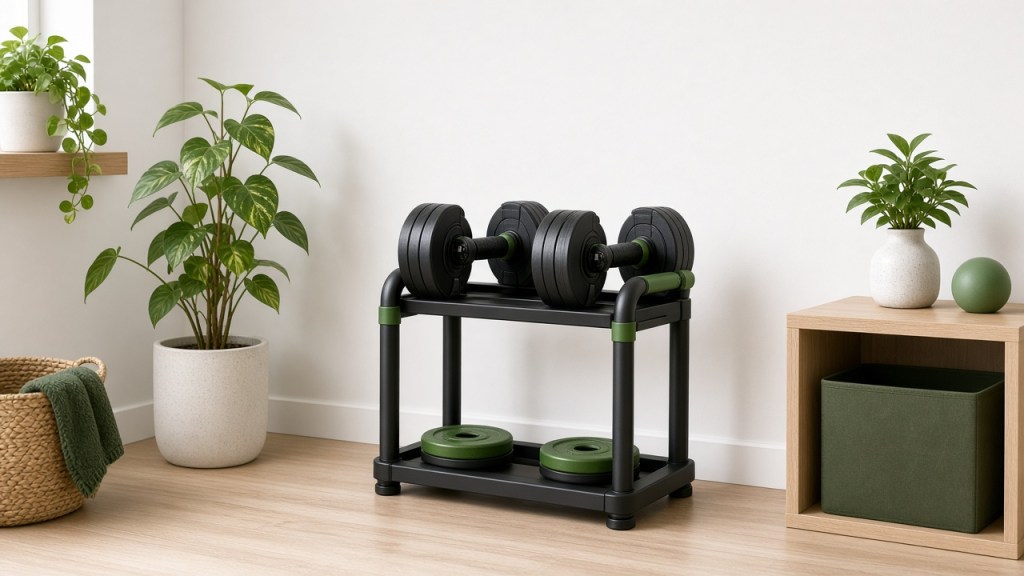
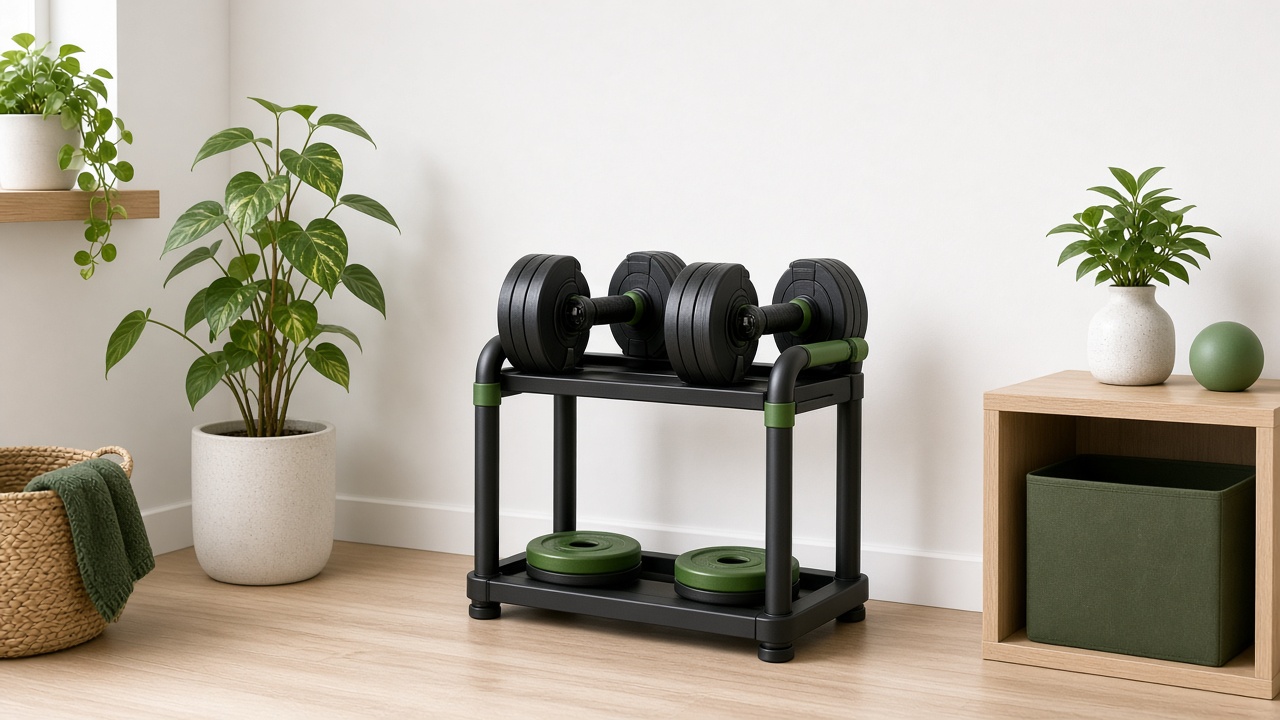
- Best overall: Core Home Fitness Adjustable Dumbbell Set (5–50 lb)
- Why Adjustable Dumbbells Suit Small Spaces
- The Main Types of Adjustable Dumbbells
- How to Choose the Right Weight Range
- Small-Space Checklist: What to Look For
- Who Should Choose What?
- Where to Store Them in a Small Home
- Handy Accessories
- Five Simple Dumbbell Moves to Start With
- Safety Reminders
- Final Thoughts
If your workout space is a corner of the bedroom, a spot beside the sofa, or a gap in a shared apartment, a full rack of dumbbells is not realistic. Adjustable dumbbells solve that problem by packing many weights into one compact pair. This guide explains the main types, how to judge size and weight range, what to look for, and who each style suits, so you can shop with confidence.
About product details: we do not list prices or ratings here, since those change often. Where we name a specific product, it is because an independent review recommended it. Weight ranges, dimensions, and current availability are best checked on the Amazon listing before you buy.
Why Adjustable Dumbbells Suit Small Spaces
- One pair replaces many. Instead of storing five or six pairs, you store one set plus a tray or stand.
- They grow with you. As you get comfortable, you can increase the weight without buying again.
- They are versatile. Squats, presses, rows, curls, lunges, and carries are all possible with a single pair.
- They tidy up easily. Many sets sit in a cradle that fits beside a wall or under a desk.
The Main Types of Adjustable Dumbbells
1. Dial or Selector Dumbbells
You turn a dial or move a selector pin, and the handle picks up only the plates you chose. Changing weight takes a few seconds, which makes this style popular for circuit-style workouts.
- Best for: people who switch weights often and want speed and convenience.
- Keep in mind: they are usually bulkier at the ends than fixed dumbbells, and the mechanism is more complex. Check the stated weight steps and the cradle size.
2. Spin-Lock (Screw-On Collar) Dumbbells
This is the traditional style: a bar with plates that you slide on and secure with a collar you tighten by hand. It is simple, often lower in cost, and very common.
- Best for: budget-minded buyers who do not mind spending a minute changing weights.
- Keep in mind: make sure collars are tight before every set. Loose plates are a safety risk. Plates also need somewhere to be stored.
3. Quick-Lock or Lever-Style Dumbbells
These use a lever, clip, or push-button mechanism to secure plates, offering a middle ground between a spin-lock set and a dial set. Changing weights is faster than screwing on collars.
- Best for: people who want faster changes without the larger footprint of some dial designs.
- Keep in mind: read how the lock engages and look for notes on durability in customer reviews.
4. Adjustable Kettlebell-Style or Multi-Use Options
Some adjustable sets convert between a dumbbell and another handle shape. They can be handy if you want variety, though they are not necessary for beginners.
How to Choose the Right Weight Range
Weight range is the most important number on the listing. A set that starts too heavy will not help with lighter moves like lateral raises, and one that tops out too low will limit lower-body work later. Think about it in two parts:
- Starting weight: pick a minimum you can handle comfortably for shoulder and arm exercises.
- Maximum weight: leave room to grow, especially for squats, deadlifts, and rows, where you can usually lift more than for overhead moves.
- Increment size: smaller steps between weights make progress feel smoother.
A simple test for the right load: you should be able to finish a set of 10 to 12 reps with good form while the last couple of reps feel challenging but controlled.
Small-Space Checklist: What to Look For
- Footprint: measure the cradle or stand and compare it to your floor space.
- Length of the dumbbell: bulky ends can make moves like presses or lunges feel awkward in tight rooms.
- Handle comfort: look for textured or knurled grips that feel secure without being sharp.
- Locking security: a secure, clearly described locking system matters more than a fancy look.
- Noise and floor protection: plates clicking into a cradle can be loud. A rubber mat helps protect floors and quiet things down.
- Weight and your lifting space: remember a heavy set must be carried and stored safely, especially in an upstairs apartment.
- Warranty and returns: check how the seller handles parts and replacements.
Specific dimensions, weight steps, and included stands are best confirmed on the Amazon listing.
Who Should Choose What?
If you are a beginner on a budget
A spin-lock set is often the simplest, most affordable start. Just remember to tighten the collars each time.
If you like fast, flowing workouts
A dial or selector set keeps you moving between exercises with minimal pauses.
If space is extremely tight
Look at the stored footprint above everything else. A compact cradle that tucks beside furniture may matter more than top-end weight.
If you share the home with others
Choose a model with a stable cradle and a clear lock so weights are not left loosely assembled. Keep them away from young children.
If you plan to progress for a long time
Pick a higher maximum weight and a reliable lock, and consider a set with a stand.
Where to Store Them in a Small Home
Storage is half the battle in a compact space. A cradle or stand keeps the dumbbells off the floor and easy to reach, and it prevents loose plates from rolling around. Good spots include beside a dresser, behind a door, in a closet corner, or under a sturdy console table. Keep the floor around the stand clear so you are never stepping over weights, and place a mat underneath to protect your flooring. If you live upstairs, think about the neighbors below and avoid dropping plates onto bare floors.
It also helps to leave a clear area about the size of a yoga mat for your workouts. Many people simply slide furniture aside for twenty minutes and put everything back afterward, which works well with any of the styles above.
Handy Accessories
A few extras can make your small-space setup better: a rubber or foam floor mat, a compact weight stand, an adjustable bench that folds flat, and a pair of gloves if you like extra grip. Add them only as you need them.
Five Simple Dumbbell Moves to Start With
- Goblet squat: hold one dumbbell at your chest, sit your hips back, and stand tall.
- One-arm row: place a hand and knee on a sturdy surface and pull the dumbbell toward your hip.
- Shoulder press: press both dumbbells overhead with ribs down and core engaged.
- Romanian deadlift: hinge at the hips with a soft knee bend, keeping the weights close to your legs.
- Bicep curl: keep elbows at your sides and lift with control.
Begin with two sets of 8 to 12 repetitions, rest between sets, and put technique ahead of weight.
Safety Reminders
- Check that all collars, dials, or locks are fully engaged before lifting.
- Place dumbbells down carefully rather than dropping them.
- Clear the floor around you of toys, cords, and furniture.
- Increase weight gradually and stop if something hurts in a sharp or unusual way.
Final Thoughts
The best adjustable dumbbells for a small space are the ones that fit your room, your budget, and your comfort level. Decide which style fits your habits, check the details on Amazon, and enjoy a compact setup that can keep working for you for years.


Leave a Reply