- Best budget: Samsonite Lumbar Support Pillow
- Best overall: Ergodriven Topo Standing Desk Mat
- Best budget: ComfiLife Anti-Fatigue Floor Mat
Sitting for hours can leave your neck tight, your back stiff, and your focus fading. A short stretch break can help you feel looser and more refreshed. This 10-minute routine can be done at or near your desk, with no special equipment.
Before You Start
Move gently and only into a mild stretch. You should never feel sharp pain, numbness, or tingling. If you have an injury or a health condition, ask a healthcare professional which movements are right for you. Breathe slowly throughout and hold each stretch for about 20 to 30 seconds unless noted.
The 10-Minute Routine
1. Neck Tilts (1 minute)
Sit tall. Slowly lower your right ear toward your right shoulder and hold. Return to center and switch sides. Keep your shoulders relaxed and don’t pull on your head.
2. Shoulder Rolls (1 minute)
Roll your shoulders up, back, and down ten times. Then reverse the direction. This can loosen tension from typing and hunching.
3. Chest Opener (1 minute)
Clasp your hands behind your back, straighten your arms a bit, and gently lift your chest. If that’s uncomfortable, hold a doorframe with one hand and turn slightly away.
4. Seated Spinal Twist (1.5 minutes)
Sit up tall, place your right hand on your left knee, and rotate gently to the left, looking over your shoulder. Hold, then switch sides. Move within a comfortable range.
5. Wrist and Forearm Stretch (1.5 minutes)
Extend one arm in front of you, palm up, and use the other hand to gently pull the fingers down. Then flip your palm down and repeat. Switch arms.
6. Seated Figure-Four (1.5 minutes)
Cross your right ankle over your left knee and lean forward slightly with a long spine. You should feel it in your hip. Hold, then switch.
7. Standing Forward Fold (1 minute)
Stand, soften your knees, and hang forward, letting your head and arms drop. Bend your knees as much as you need. Roll up slowly.
8. Hip Flexor Stretch (1 minute)
Take a step back with one foot into a short lunge, tuck your tailbone, and gently shift forward. Hold on to your desk for balance. Switch sides.
9. Calf Raises (30 seconds)
Rise onto your toes and lower slowly, about ten times. This gets circulation going after sitting.
Make Your Workspace Friendlier
Stretching helps, but small setup tweaks can reduce strain as well. Start with free changes:
- Keep your screen at about eye level
- Keep your feet flat on the floor
- Position your keyboard so your elbows rest near 90 degrees
- Take a break every 30 to 60 minutes to stand or walk
Lumbar Cushion
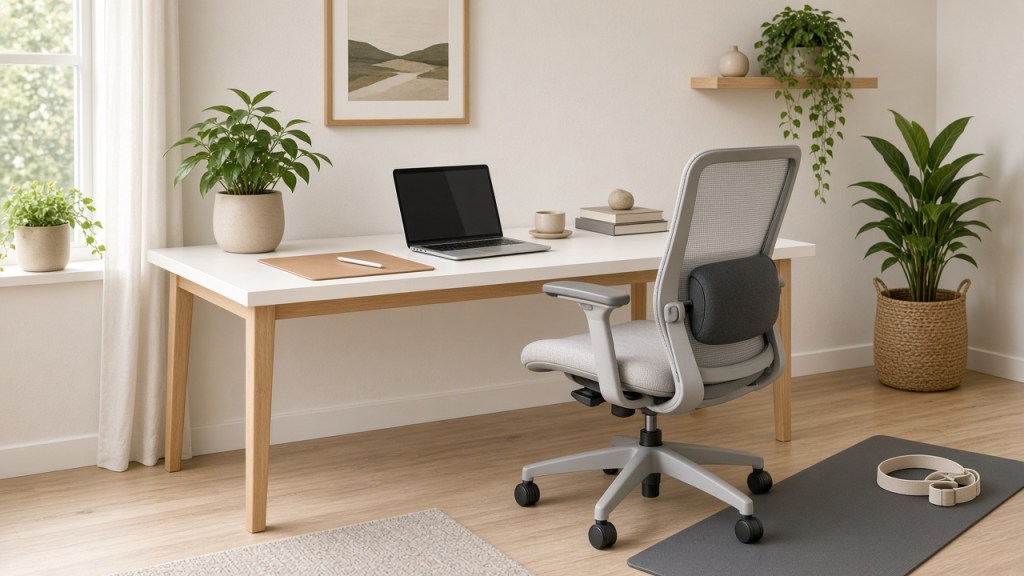
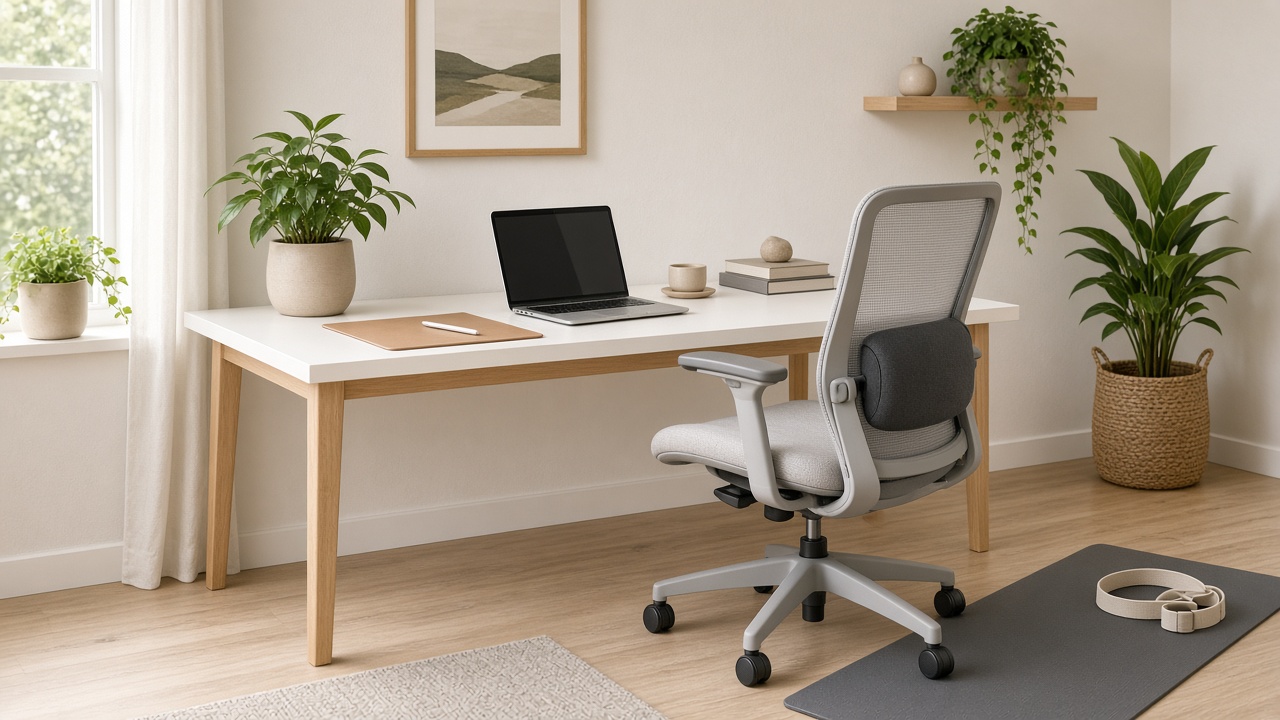
A lumbar cushion is a small support placed at the curve of your lower back in a chair. It may make a seat feel more comfortable if your chair doesn’t offer much support. Look for adjustable straps, a shape that fits your chair, and a firmness you find comfortable. It isn’t a cure for anything, and some people won’t need one.
Standing Desk Mat
If you use a standing desk, a cushioned mat can make standing more comfortable on hard floors. Look for a non-slip base, beveled edges to reduce tripping, and a size that gives you room to shift your feet. Change positions regularly, since standing all day isn’t ideal either.
| Product | Label | Who it’s for |
|---|---|---|
| Ergodriven Topo Standing Desk Mat | Best overall | Full-day standers |
| ComfiLife Anti-Fatigue Floor Mat | Best budget | Occasional standing |
| House of Noa Nama Standing Mat | Standers who want a bouncy flat mat |
Build It Into Your Day
Try pairing stretches with existing cues:
- Do the neck and shoulder moves after each long meeting.
- Stand and fold forward while your coffee brews.
- Set a recurring timer for a two-minute mini break.
- Do the full 10 minutes once at lunch.
Short on Time?
Pick three moves: shoulder rolls, the twist, and the wrist stretch. Even two minutes can break up a long sitting period.
When to Get Help
If you have ongoing pain, numbness, or tingling, talk to a doctor or physical therapist. Stretching is general wellness advice and isn’t a replacement for personal medical care.
Final Thoughts
A few minutes of gentle movement can make a long workday feel better. Pick the stretches that feel good, repeat them daily, and adjust your setup as needed. Try the first three moves at your desk right now.


Leave a Reply